Thursday, August 4, 2011

Another Melioria coffee house salon transcript: Tolerance in the Englightenment

~~~

Our coffee House Salon held on July 23, 2011

My apologies for my tardiness in posting this--the convoluted adventure that is my meatspace existence has delayed me from attending to more important issues. What follows is the transcript from out second "coffee house salon" on the island of Melioria in Second Life. The subject was Tolerance in the Enlightenment, and participants prepared by reading a variety of pieces from the period including John Locke's Letters on Tolerance, an excerpt from an 18th century German play in which Jewish and Muslim characters were treated with great sympathy and respect, and the one of the key British anti-catholic laws of the 18th century. Please keep in mind that the discussion was conducted "in character" set in the year 1780 (which kept us from including some later interesting materials).

[08:12] Aldo Stern: The topic for today is...tolerance...particularly as it applies to various religions and religious affiliations in Europe.

[08:13] Aldo Stern: have you all had the opportunity to look at the readings that the Baronessa and I prepared in advance?

[08:14] OFlaherty Dreadlow: I confess that I haven't.

[08:14] Diogeneia (diogenes.kuhr): Quite allright that is. It is merely to get the conversation going.

[08:14] Sere Timeless (serenek.timeless): Yes, I have looked at the materials. And have been reviewing some recent publications by Monsieur’s Rousseau and Voltaire.

[08:15] OFlaherty Dreadlow: Ah, yes....I did read through it quickly.

[08:15] Diogeneia (diogenes.kuhr): and I would start there...

[08:15] Diogeneia (diogenes.kuhr): The Professore wanted to put the quote from the Jew, Shylock, at the beginning ... what did you have in mind with that, Herr Professor?

[08:15] OFlaherty Dreadlow: There are, of course, newer writings...from our friends in the erstwhile colonies.

[08:16] OFlaherty Dreadlow: Jefferson, for one

[08:16] Sere Timeless (serenek.timeless): Indeed. Mr. Jefferson has stirred up quite a bit of trouble with his Declaration of Independence.

[08:16] Aldo Stern: oh excellent points...we will get to those in minute...

[08:16] Aldo Stern: in answer to the Baronessa, I put that piece from the play there, because I think it represents something ...the mixed state of tolerance and it's cousins, empathy and acceptance, in Europe have been for some time and remain mixed.

[08:18] Aldo Stern: the playwright puts words in Shylock's mouth that imply an understanding of the injustice of his situation and of his people.

[08:18] Aldo Stern: at the same time, that he is unlikable character and comes out badly in the end of the play.

[08:19] Aldo Stern: our feelings versus our ideals are often at odds...

[08:19] Aldo Stern: but let us start with ideals...Sere, you mentioned looking at Rousseau and others...what did you take away from reviewing their thoughts on tolerance?

[08:20] Sere Timeless (serenek.timeless): The idea that it is important to separate religious allegiance from civil allegiance.

[08:20] Sere Timeless (serenek.timeless): That for the good of the state we must allow every person the right to their own religious practice.

[08:21] Aldo Stern: then they are saying societies should tolerate religious differences not so much for ideals, but for pragmatic reasons?

[08:22] Sere Timeless (serenek.timeless): I think so. But both Rousseau and Voltaire clearly believe there are some common civil ideals that must bind us all together.

[08:23] Aldo Stern: civil ideals , but not spiritual ones?

[08:23] Sere Timeless (serenek.timeless): It is interesting, I think, that both of those gentleman seem to separate the two. Yet when each talks about civic/civil ideas they seem very much grounded in the Christian tradition.

[08:24] Aldo Stern: interesting, indeed...

[08:24] Aldo Stern: your Lordship, you mentioned the American, Signore Jefferson...do you have some insights into how he views the issue?

[08:24] OFlaherty Dreadlow: Well, that touches on what I think is the crucial point.

[08:24] Aldo Stern: yes?

[08:24] OFlaherty Dreadlow: Note that we tend to talk about religious tolerance....

[08:25] OFlaherty Dreadlow: In essence, that means that we "tolerate" those with dissenting--that is, incorrect--views for the sake of a civil society.

[08:25] OFlaherty Dreadlow: Jefferson wrote the Statute of Religious FREEDOM in 1777.

[08:26] OFlaherty Dreadlow: That states that ALL religious points of view--from the point of the state--are equally valid and is revolutionary

[08:27] Sere Timeless (serenek.timeless): I wonder if Mr. Jefferson would be quite so tolerant of a religion that required human sacrifice. That would seem to put religious beliefs and the common good at odds.

[08:27] OFlaherty Dreadlow: And, if I may broach a delicate subject, why most of views like that were hidden in secret societies.

[08:28] OFlaherty Dreadlow: That would violate a basic civil law and could be banned on that basis.

[08:29] Aldo Stern: but then is not Signore Jefferson essentially a deist.

[08:30] OFlaherty Dreadlow: He was but it was not crucial for him to be a deist to believe that--from society's point of view--all religions are valid.

[08:30] Aldo Stern: taking a philosophical perspective that there is a Divine, and all religions are some form of manifestation of that, and consequently all valid.

[08:31] OFlaherty Dreadlow: It's important to keep in mind that one period of "tolerance" can be followed by one of intolerance when those in "hiding" come out in the open and are...removed.

[08:31] Diogeneia (diogenes.kuhr): I think his Lordship makes a interesting point about the revolutionary nature of this...as it does seem to be a mix of principles and ideals ... it is good for the state for the different groups to be productive elements of society.

[08:31] OFlaherty Dreadlow: Hence, the Masons....even more, speaking of Jefferson, hence the Illuminati.

[08:31] Diogeneia (diogenes.kuhr): but also there is an idealism there.

[08:32] Diogeneia (diogenes.kuhr): it not just simply like with the Jews in some places where they are tolerated, but not accepted, because of their banking skills and resources.

[08:33] OFlaherty Dreadlow: Exactly, until the wealth those areas provide become tempting and subject to jealousy.

[08:33] Aldo Stern: yes, or they are perceived as becoming too politically powerful.

[08:33] OFlaherty Dreadlow: Indeed.

[08:34] OFlaherty Dreadlow: AND they are identifiable because of the earlier "tolerance."

[08:34] Aldo Stern: as happened when the British were considering a naturalization act for the Jews back in the 1750s.

[08:34] Aldo Stern: popular opinion was stirred up and the act failed not so much on issues of faith, but because many English people feared the Jews could take control of their political affairs.

[08:35] OFlaherty Dreadlow: Which brings us to the crux of the problem: human nature that seeks to protect itself by attacking the "other"

[08:36] Diogeneia (diogenes.kuhr): well is that not why the Freemasons are suppressed some places--fear of their power and influence?

[08:36] Diogeneia (diogenes.kuhr): and isn't that what happened to the Jesuits as well?

[08:36] Sere Timeless (serenek.timeless): And it is often easier to "justify" acts of intolerance and suppression by appealing to religious belief and God, than to admit to jealousy and fear.

[08:37] OFlaherty Dreadlow: At the moment, their influence is open--consider General Washington--but there will undoubtedly be a reaction from those outside their area of power.

[08:37] Aldo Stern: well that is a very complex chicken and egg thing isn't it?

[08:37] Aldo Stern: like with Catholics in Britain

[08:37] Aldo Stern: there is a fundamental ideological difference between the catholic and protestant perspectives

[08:38] Aldo Stern: they each think they are the one true version of Christianity.

[08:38] OFlaherty Dreadlow: Yes, I fear my mother's family (I'm half British/half Irish) will suffer much for their refusal to "conform"

[08:39] Aldo Stern: but in trying to impose the ideals, there is a see-saw history of struggling for power, and kings of the different faiths, and the gunpowder plot and the Jacobites uprising... and on and on.

[08:39] Aldo Stern: there is fear of Catholics among protestant Britons not just because of issues of faith, but because of the history that is there.

[08:40] Aldo Stern: that is why they have the settlement act regarding the faith that their rulers must adhere to.

[08:40] Diogeneia (diogenes.kuhr): which we had in our notes

[08:40] Aldo Stern: yes, Baronessa, we did

[08:40] Aldo Stern: thank you for finding that

[08:40] Diogeneia (diogenes.kuhr): *grins*

[08:40] Sere Timeless (serenek.timeless): One thing that makes Britain and the papal states different from many other nations is the fact that their civil authority -- the king or the Pope -- is also a religious authority.

[08:41] Aldo Stern: ah an important point...head of state as also head of the state religion.

[08:41] OFlaherty Dreadlow: All wars--both military and political--believe that THEIR war will end all wars.

[08:42] Sere Timeless (serenek.timeless): Hence the appearance, and often the reality, is that if you don't conform to the state religion you are somehow a lesser citizen.

[08:42] Aldo Stern: well speaking of political power...how do you all feel regarding the Jesuits...and speaking of popes and their authority...

[08:42] Aldo Stern: have the Jesuits been suppressed in so many catholic states because someone fears them?

[08:43] OFlaherty Dreadlow: Intellectuals of all types are feared by the state

[08:43] Diogeneia (diogenes.kuhr): but not all states.

[08:44] Diogeneia (diogenes.kuhr): the Prussian King and Great Catherine in Russia have taken in the Jesuits and given them refuge.

[08:44] OFlaherty Dreadlow: Refuge....not inclusion

[08:44] Diogeneia (diogenes.kuhr): mostly for the pragmatic reasons I think...good teachers they are.

[08:44] OFlaherty Dreadlow: And refuge can turn into entrapment at any time.

[08:44] Diogeneia (diogenes.kuhr): I know Der Alte Fritz thinks having them teaching in Prussia strengthens his state.

[08:44] Sere Timeless (serenek.timeless): There is often fear of things that one does not understand and cannot control. Most secret societies, including the Jesuits, fall into that category.

[08:45] Aldo Stern: There are some who see a connection between the Jesuits and the freemasons and revolutionary ideas that could potentially overthrow old systems in places like France.

[08:46] OFlaherty Dreadlow: Since Rome ruled the western world, we have seen outsiders being taken into the state as "workers" but they usually grow into threats to the state.

[08:46] Giovanni Marco Byers (joubert.byers): Greetings...

[08:47] Aldo Stern: good day , Your Eminence. How good of you to join us

[08:47] Giovanni Marco Byers (joubert.byers): Good Morning, Sir and Madame. Please continue your conversation...

[08:47] Aldo Stern: we were discussing the various manifestations of intolerance...and the suppression of certain groups such as the Freemasons and the Jesuits and the limitation of rights for Jews in many places, or Catholics in England.

[08:48] Aldo Stern: and I think one theme that we have seemed to agree on, is that at the heart of intolerance is fear.

[08:48] Giovanni Marco Byers (joubert.byers): oh well, the age of enlightenment is an interesting topic...

[08:48] Giovanni Marco Byers (joubert.byers): about the Jesuits...I have some definite ideas...

[08:49] Aldo Stern: yes, Your Eminence, what are your thoughts regarding the Jesuits?

[08:49] Giovanni Marco Byers (joubert.byers): In my own opinion I don't think the Jesuits will be suppressed.

[08:50] Giovanni Marco Byers (joubert.byers): first of all, if the Jesuits really introduce new ideas I don't see anything that will undermine His Holiness...

[08:51] OFlaherty Dreadlow: Not suppressed? Everywhere, Eminence....or just where the Pope holds power?

[08:51] Giovanni Marco Byers (joubert.byers): There are some people who may disagree with my opinion, however, and we must obey the decisions of His Holiness...

[08:51] Aldo Stern: there is the possibility that His Holiness was pressured, particularly by the Spanish and French courts about the Jesuits, but that his heart is not really in the suppression and that he was secretly pleased that Prussia and Russia have given them refuge.

[08:52] Giovanni Marco Byers (joubert.byers): The biggest problem, I think, will be the Spanish monarch.

[08:52] Sere Timeless (serenek.timeless): Why do you suppose that the Spanish and French courts are so fearful of the Jesuits?

[08:53] Aldo Stern: Perhaps that brings us to the other side of this ... what moves some people to look upon the benefits of tolerance...and to give more rights to oppressed religious minorities in their countries...

[08:53] OFlaherty Dreadlow: And we should not forget the Dutch....who have been most tolerant.

[08:54] OFlaherty Dreadlow glances at the cardinal for his reaction to that

[08:54] Aldo Stern: we mentioned Jefferson and Rousseau and Voltaire, but I rather liked the quote we included in the readings from John Locke, the English philosopher and doctor who was such an early influence.

[08:54] Aldo Stern: and he seems to be saying that tolerance is what a good Christian would do.

[08:55] Giovanni Marco Byers (joubert.byers): The monarchs of Spain are afraid of what will happen if their colonies and trade arrangements are subjected to an organization that isn’t Spanish. Jesuits actually stand for the Papal State.

[08:56] Sere Timeless (serenek.timeless): Getting back to the Professore’s point, I think many of the current batch of philosophers make the point that Christian teaching makes it clear that all human knowledge is fallible.

[08:56] Sere Timeless (serenek.timeless): Thus it is difficult to assert that one group's understanding of religion is better than the rest.

[08:56] Aldo Stern: which brings us back to a philosophical underpinning for tolerance.

[08:57] Diogeneia (diogenes.kuhr): philosophy is one thing, but ultimately when most states act ... when governments act, when rulers act, they are doing what they see as good for their interests.

[08:57] OFlaherty Dreadlow: and this is probably a good point for me to beg your pardon.

[08:57] OFlaherty Dreadlow: I fear I have another engagement...

[08:57] Diogeneia (diogenes.kuhr):

[08:57] Sere Timeless (serenek.timeless): We have appreciated your company and insights, Lord Dreadlow.

[08:59] Aldo Stern: your Lordship, thank you for joining us .

[08:59] Aldo Stern: anyway, Baronessa, you were saying?

[08:59] Diogeneia (diogenes.kuhr): well...

[08:59] Diogeneia (diogenes.kuhr): that Prussia takes in the Jesuits because they are an intellectual resource.

[09:00] Diogeneia (diogenes.kuhr): they take in the Jews and treat them relatively fairly because they have resources and skills.

[09:00] Aldo Stern: the British have arguably done the same.

[09:00] Giovanni Marco Byers (joubert.byers): Russia has also done the same, I know.

[09:00] Sere Timeless (serenek.timeless): And so Prussia has separated religious belief from acting for the good of the state. Very progressive.

[09:00] Diogeneia (diogenes.kuhr): and sometimes maybe one nation might take in the French protestants just because they are thinking it will annoy the French.

[09:01] Aldo Stern: *laughs*

[09:01] Giovanni Marco Byers (joubert.byers): but apart from insuring the survival of the Jesuits, I see accepting the Jesuits into Russia as a more progressive action, especially because of what they can do for education.

[09:01] Diogeneia (diogenes.kuhr): ja, Eminence you are right, I think Catharine likes the Jesuits for what they can do to advance learning in her country.

[09:02] Diogeneia (diogenes.kuhr): pretty much backward they are, you know.

[09:02] Giovanni Marco Byers (joubert.byers): exactly

[09:02] Aldo Stern: yes, she desperately wants to create a modern nation.

[09:03] Aldo Stern: It is essential for Russia's survival and that means modernizing thought and education as well as industry and the military.

[09:04] Aldo Stern: but as we have said before...

[09:04] Aldo Stern: it is one thing to be tolerant of a religious group or an organization for pragmatic reasons, but it is another to see the "other" as a person.

[09:05] Aldo Stern: to accept him and his beliefs

[09:05] Aldo Stern: which is why we included the last bit from the play Nathan the Wise

[09:05] Aldo Stern: because what is interesting to me in that is that the Jewish characters, unlike Shylock, are likable and sympathetic.

[09:05] Giovanni Marco Byers (joubert.byers): Don’t forget that during most of the 18th Century, the church is a kingdom with a monarch (pope), prince (cardinal), land, and money.

[09:06] Diogeneia (diogenes.kuhr): ja. eminence

[09:06] Aldo Stern: the individuals in the play ..., Muslim, Jewish and Christian

all have good qualities

[09:07] Giovanni Marco Byers (joubert.byers): But 1773 is the year that the Papal State dissolved, and most of the cardinals became representative of their kingdom’s monarch ... not the Pope. This is especially true in Spain.

[09:08] Giovanni Marco Byers (joubert.byers): The people who are afraid of the ideas of the enlightenment think the new ideas will destroy the christianity of the Church because they could undermine the traditional order and rules of the church. For example, the church had strong views about the nature of the universe.

[09:09] Giovanni Marco Byers (joubert.byers): I forget the name of the scientist who was executed by the church because he described a theory of the universe which contradicted the church’s teaching.

[09:10] Sere Timeless (serenek.timeless): Cardinal, do you think that the notion of religious tolerance ought to extend to matters of science?

[09:11] Giovanni Marco Byers (joubert.byers): For the most part I agree. On the one hand I think the rule of the church, or I shall say the belief, should be under control by the Pope himself, but the Jesuits are another matter.

[09:11] Giovanni Marco Byers (joubert.byers): Because of the Jesuits I think the church will be better able to focus on what we should focus on to do better.

[09:11] Aldo Stern: but again, as the Jesuits showed ... or John Locke stated ... learning, science, new ideas do not necessarily undermine our faith.

[09:12] Aldo Stern: we can be good Christians, ..or Jews ... or Zoroastrians I suppose, and still believe in the importance of new ideas and reason.

[09:12] Sere Timeless (serenek.timeless): But learning and science can undermine the ideas that have been promulgated for centuries by the head of a religious group like the Pope. That can seem very threatening.

[09:13] Giovanni Marco Byers (joubert.byers): I certainly accept it will be threatening, but the oversight of the papal state is needed because the inventor of a new idea might overreach and cause further rebellion.

[09:14] Aldo Stern: change is always threatening from a certain perspective.

[09:14] Giovanni Marco Byers (joubert.byers): But the Jesuits seem to be changing the thinking of the church especially on education and new scientific invention which is needed in the world today.

[09:15] Sere Timeless (serenek.timeless): I think we can agree that it is more difficult for a state to be tolerant of dissenting views, whether religious or scientific, when the head of the state is a religious leader.

[09:16] Sere Timeless (serenek.timeless): But I would like to get back to the ideas of Locke about how ordinary people view other religious groups.

[09:16] Aldo Stern: which is why as you said Sere, it was so interesting that Frederick of Prussia has separated the civil and religious authority...

[09:16] Aldo Stern: and his primary concern is what is good for the state.

[09:17] Sere Timeless (serenek.timeless): That separation makes it easier for ordinary people to be tolerant of other religions, I think. It seems almost a necessary precursor.

[09:19] Giovanni Marco Byers (joubert.byers): I enjoyed the conversation today but must be going.

[09:19] Aldo Stern: we are very pleased that you could join us, Your Eminence

[09:20] Sere Timeless (serenek.timeless): Thank you for coming Your Eminence. We have appreciated your ideas

[09:20] Giovanni Marco Byers (joubert.byers): I am glad that the people have thought about the importance of enlightenment ... I am not one of those ultra-conservatives.

[09:20] Giovanni Marco Byers (joubert.byers): have a good day...

[09:20] Diogeneia (diogenes.kuhr): a pleasure it was to meet you.

[09:20] Giovanni Marco Byers (joubert.byers): pleasure to meet you all too.

[09:20] Sere Timeless (serenek.timeless): Good day.

[09:20] Aldo Stern: arrividerci

[09:22] Aldo Stern: well shall we finish with Locke?

[09:22] Aldo Stern: the bit I was really impressed by was this:

[09:22] Aldo Stern: "I esteem that toleration to be the chief characteristic mark of the true Church."

[09:23] Aldo Stern: I think Locke sees tolerance as a Christian duty.

[09:23] Sere Timeless (serenek.timeless): A very revolutionary idea, and one that has resonated among the Enlightenment thinkers.

[09:24] Diogeneia (diogenes.kuhr): well I think especially those who have a broader, less dogmatic view of their Christianity.

[09:25] Aldo Stern: like a Jefferson?

[09:26] Aldo Stern: unless I am very much mistaken we are all getting mentally tired.

[09:27] Aldo Stern: but may I sum up a few pints and see if we agree...

[09:27] Sere Timeless (serenek.timeless): I think perhaps you are right, Professore.

[09:27] Aldo Stern: that the root cause of intolerance and persecution may be ideological...or based in issues of faith...

[09:27] Aldo Stern: but he real engine of intolerance is fear.

[09:28] Diogeneia (diogenes.kuhr): I would agree with that

[09:28] Sere Timeless (serenek.timeless): An excellent summary.

[09:28] Aldo Stern: and that the growth of tolerance is to a great extent based in pragmatism.

[09:29] Aldo Stern: but what will give it greater resonance is the philosophical ideals...from a broader view of what it means to be a person of faith.

[09:29] Diogeneia (diogenes.kuhr): hmmm

[09:29] Diogeneia (diogenes.kuhr): maybe

[09:30] Sere Timeless (serenek.timeless): Certainly if tolerance can be made to seem like a core tenet of faith it is easier for most people to practice it.

[09:30] Diogeneia (diogenes.kuhr): but what makes tolerance work in my old homeland in Franconia...where both Catholics and Lutherans coexist happily...

[09:30] Diogeneia (diogenes.kuhr): is simple humanity...you live close with people and you see them as people, not a papist or a Lutheran.

[09:31] Aldo Stern: or a Jew

[09:31] Diogeneia (diogenes.kuhr): ja

[09:31] Sere Timeless (serenek.timeless): Living side by side reduces the amount of the "unknown" -- there is simply less to fear about people you know.

[09:31] Diogeneia (diogenes.kuhr): my husband he was a Lutheran but not such a good one.

[09:32] Diogeneia (diogenes.kuhr): maybe that helped?

[09:32] Sere Timeless (serenek.timeless): If tolerance is a Christian virtue, your late husband might have been the very best kind of Lutheran.

[09:32] Aldo Stern: well on that note, I think we can bring this to a close

[09:32] Aldo Stern: I found the discussion very interesting

[09:33] Sere Timeless (serenek.timeless): Thank you for leading us Professore.

Saturday, July 16, 2011

More than tea and fashion--the first "Coffee House Salon"

~~~
One of the criticisms of the 18th century rp in SL is that the intellectual discourse is mostly fashion chit chat and gossip over tea. That is of course about as unfair and incorrect as saying that SL is nothing more than griefers and cyber-sex.

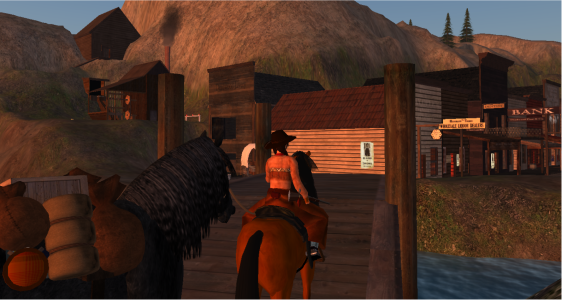
The entrance to the coffee house near the harbor


As an example I would like to present to you an edited transcript of this morning's first in a series of discussions at our informal "Coffee House Salon" near the harbor in Melioria.

The following is presented with the permission of those who participated:


[08:26] Aldo Stern: at any rate, , the topic, is servants and masters...and how those tradtional relationships are perhaps changing

[08:27] Aldo Stern: recently, in another venue for discussion...

[08:27] Aldo Stern: a fellow asked the question of how people treated their servants...

[08:27] Aldo Stern: which struck me as interesting, the fact that he was even asking the question

[08:28] Aldo Stern: in the past....not so long ago, I do not think anyone would have bothered asking such a question

[08:28] Belladonna OHare: indeed

[08:29] Aldo Stern: have any of you read Castiglione's “Book of the Courtier?”

[08:29] Aria Vyper: no :-(

[08:29] Diogeneia (diogenes.kuhr): ja, but it was many years ago

[08:30] Belladonna OHare: no

[08:30] Belladonna OHare: I have not

[08:30] Aldo Stern: Frau Kuhr, would you describe it for the others?

[08:30] Diogeneia (diogenes.kuhr): ah, it is the grandfather, so to speak , of the conduct books

[08:30] Diogeneia (diogenes.kuhr): telling people how they should behave

[08:30] Belladonna OHare: ahhh indeed

[08:31] Belladonna OHare: I must get it

[08:31] Diogeneia (diogenes.kuhr): back in the 1500s I think it was written

[08:31] Diogeneia (diogenes.kuhr): telling how the good nobleman should act, and dress and all that

[08:31] Aria Vyper: wow - long time ago

[08:31] Aldo Stern: exactly

[08:31] Aldo Stern: all the books of manners today are arguably descended from Castiglione's

[08:32] Aldo Stern: do you recall Frau Kuhr, did he say anything about how a proper nobleman should treat his servants?

[08:32] Diogeneia (diogenes.kuhr): ah

[08:32] Diogeneia (diogenes.kuhr): hmmm

[08:32] Diogeneia (diogenes.kuhr): no

[08:32] Diogeneia (diogenes.kuhr): I think it said the good courtier is gracious to everyone

[08:33] Diogeneia (diogenes.kuhr): but...like I said... it was a long time ago I read it

[08:33] Aldo Stern: that's my point...actually..in his day, social rank and position was set...everyone had a place

[08:34] Aldo Stern: and yes the good courtier was gracious and proper with everyone...but all Castiglione said about servants was that they should be as polite and well mannered as their lord

[08:34] Aldo Stern: well dressed, clean

[08:34] Aldo Stern: he put a lot of emphasis on being clean for some reason

[08:34] Aldo Stern: but back then...I suspect how people were to treat servants was understood

[08:34] Aldo Stern: no one would have asked the question, “how do you treat your servant?”

[08:34] Aldo Stern: ...but now they do...so times, are changing, yes?


[08:34] Belladonna OHare: now those lines are being blurred

[08:35] Aldo Stern: ah Donna Bella has already answered question

[08:35] Aldo Stern: yes lines are blurred

[08:36] Aldo Stern: I know of a novelist and philosopher in germany...both of his parents were domestic servants

[08:37] Aldo Stern: two hundred years ago, could you have imagined such a thing happening?

[08:38] Aldo Stern: in your observations, ladies, may I ask, what do you observe? how do your friends and acquaintances treat their servants?

[08:39] Diogeneia (diogenes.kuhr): you mean when they aren't slapping them?

[08:40] Aldo Stern: oh come now, they aren't all slapping them, all the time

[08:41] Diogeneia (diogenes.kuhr): well, no not all the time...sometimes they are asleep

[08:41] Belladonna OHare: I observed an incident recently of one noble lady

[08:41] Belladonna OHare: abusing a small boy, the servant of the king's mistress

[08:42] Belladonna OHare: many ladies of the court where appalled at the treatment and comforted the child

[08:42] Diogeneia (diogenes.kuhr): I am glad to hear that Fraulein Bella...but I wonder if the abuse had been of an adult, would any sympathy have been offered?

[08:42] Vanessa Montpenier: well I think the majority of people still thinks a servant is born with his "title" and dies with his "title" but on the other hand, I believe this attitude for the servants differs in every culture

[08:42] Aldo Stern: ah that is an interesting point Donna Vanessa...it is different in different situations and cultures?

[08:43] Vanessa Montpenier: indeed

[08:43] Belladonna OHare: I believe basic humanity is the same from culture to culture

[08:43] Belladonna OHare: some are kind...some are not

[08:44] Aldo Stern: ah very true...

[08:44] Belladonna OHare: I have observed that the woman who was cruel to the servant is cruel in all her dealings

[08:45] Aldo Stern: not just to servants, but to her equals as well?

[08:45] Belladonna OHare: Yes, Professore

[08:45] Vanessa Montpenier: well in the oriental world, they collect small boys from the vilages and take them to the palace and some of them are chosen to have the education with the future "sultan" and the rest are chosen to be servants

[08:46] Diogeneia (diogenes.kuhr): so that is just by chance? that you become a vizier or a servant?

[08:46] Belladonna OHare: The luck of the dice determines your future?

[08:47] Belladonna OHare: How interesting those Easterners are.

[08:47] Vanessa Montpenier: you quite misunderstand madame.. when they collect the kids from the villages, they are taken to a place like a dormitory

[08:47] Aldo Stern: I suspect there is more to it--that they see which child may be best suited for a certain future...

[08:47] Aldo Stern: so it is a bit more of a judgement

[08:47] Vanessa Montpenier: yes, they make..mm.. how to say... exams... physical and intellectual

[08:47] Belladonna OHare: I see

[08:47] Aldo Stern: but perhaps at the heart of it, they look on them all as servants

[08:48] Aldo Stern: it is simply that the educated vizier is still a servant of his sultan in matters of diplomacy and administration...

[08:48] Belladonna OHare: I quite agree, as there is no choice for the children in the matter

[08:48] Aldo Stern: while his less educable brother serves as the cup bearer

[08:48] Belladonna OHare: so in the end they are all servants

[08:49] Vanessa Montpenier: but the point is, the sultan always keeps his servants close to him and he trusts them more than anyone in the palace

[08:50] Vanessa Montpenier: what I am tryin to say is, in the oriental world, servants are collected and raised from the early ages

[08:50] Belladonna OHare: Indeed, there has always been a vast difference between East and West!

[08:50] Diogeneia (diogenes.kuhr): ahhhh... I think Donna Vanessa's point about different cultures is very important...Diogeneia (diogenes.kuhr): not just different places, but different circumstances

[08:50] Diogeneia (diogenes.kuhr): for example...in the great palace of a king, the hundreds of servants will have a different relationship than in a country house, where the family has one steward, and a cook

[08:50] Diogeneia (diogenes.kuhr): in those country houses...well, like mine...the servants were more...like part of the family

[08:51] Belladonna OHare: Indeed Frau Kuhr

[08:51] Aldo Stern: and I assume you as the lady of the household had obligations to those servants, as they were, more or less, "part of the family"?

[08:52] Belladonna OHare: In the country the servants are not separated physically by vast distances, such as in a large chateau

[08:52] Diogeneia (diogenes.kuhr): yes of course

[08:52] Vanessa Montpenier: but unfortunately no matter how they are different from us, the gold coins talk nowadays *smiles*

[08:52] Aldo Stern: how do you mean Donna Vanessa?

[08:53] Vanessa Montpenier: I mean financially Don Aldo

[08:54] Aldo Stern: can you elaborate on what you mean?

[08:55] Vanessa Montpenier: Europe has a deep history and modern culture, although how the majority of people still treat their servants, is in the old ways...but what I am trying to say is that East has the chance to adopt this civilization but their culture, I think, will not let them do so...

[08:56] Aldo Stern: hmmm

[08:56] Aldo Stern: so our relationships between different people of different stations are set by traditions..,.even religion, perhaps?

[08:57] Vanessa Montpenier: well.. what I personally believe, no matter how people try to enlighten themselves, their traditions can haunt them..

[08:58] Diogeneia (diogenes.kuhr): ahhhh

[08:59] Aldo Stern: which is why, even in modern Europe of 1780, there is so much tension and inconsistency as our relationships change?

[08:59] Belladonna OHare: those traditions may be in the back of our mind Madame, but I believe the truly the enlightened can learn and change and better themselves.

[08:59] Belladonna OHare: that is my hope for our future

[09:00] Vanessa Montpenier: despite your correct remarks madame, enlightenment needs certain amount of time and philosophy

[09:00] Aldo Stern: that is a very enlightened viewpoint Donna Bella, it brings to mind the excerpt from Daniel Defoe's Family Instructor that I included on the notecard

[09:00] Aldo Stern: did any of you have a chance to read it?

[09:02] Diogeneia (diogenes.kuhr): ja...once I got used to his style, I thought it was interesting...Herr Defoe, he wrote about this very religious servant, who "taught" things to not just the children of the family she worked for, but to her Mistress as well!

[09:03] Diogeneia (diogenes.kuhr): it was the ideal, not so much the reality, I think

[09:03] Aldo Stern: yes...probably

[09:04] Aldo Stern: it is in some ways a conduct book

[09:04] Aldo Stern: like the Book of the Courtier, but it is so very very different...written as a fictional story, almost like a play

[09:05] Aldo Stern: it is also important to note that it is about families that are not of high rank, but in the middle somewhere

[09:05] Aldo Stern: and at the end, the sea captain, who is wealthy but not of noble rank, marries the good servant girl

[09:06] Diogeneia (diogenes.kuhr): ja, that would not happen with the servant of a noble...they might have the carnal relations, but never the getting married

[09:06] Diogeneia (diogenes.kuhr): where I come from, in places like Prussia, if a noble marries outside of their class, they lose the noble status, by law

[09:07] Aldo Stern: hmmm good point

[09:07] Aldo Stern: but still..even if it is not a realistic story...more like a fable....it is encouraging something: that servants should do more than just dress the children and teach them nursery rhymes...

[09:09] Aldo Stern: but teach them their prayers...be a good christian influence on those you work for

[09:09] Aldo Stern: this I think is a pretty remarkable idea...that a servant could have a good influence on their "betters"

[09:10] Diogeneia (diogenes.kuhr): this Defoe fellow, he is the writer of the Robinson Crusoe story, ja?

[09:10] Aldo Stern: yes, indeed he is

[09:11] Diogeneia (diogenes.kuhr): I think he writes about how he thinks things should be like, more than how they are

[09:12] Aldo Stern: yes...he actually got placed in the pillory for three days for his writing

[09:12] Aldo Stern: but that was early in this century

[09:12] Aldo Stern: things are different now...

[09:12] Aldo Stern: I hope...

[09:13] Aldo Stern: for example...Signore Pierre Beaumarchais, who has written the humorous play the “Barber of Seville”....

[09:14] Aldo Stern: the French King and his government, would not let them show the play at first...but at least he did not have Beaumarchais thrown in prison or put in the pillory

[09:14] Diogeneia (diogenes.kuhr): and now they have even let him put onthe play, yes?

[09:15] Aldo Stern: yes..did any of you have the chance to see the play, or perhaps read the little excerpts inthe notecard?

[09:16] Diogeneia (diogenes.kuhr): very funny I thought they were

[09:18] Vanessa Montpenier: I am afraid I have not had the chance yet

[09:18] Diogeneia (diogenes.kuhr): surprised I am that he didn't get in more trouble for that...making fun of nobles

[09:19] Aldo Stern: I particularly found these lines from the play to be striking:


Count.

I do not believe thou tellest all the Truth; I remember thou had’st but a dubious Character when in my Service.


Figaro.

My God! my Lord, you rich Folks always would have us poor ones be entirely without faults.


Count.

Idle, debauch’d,


Figaro.

According to the Perfections you fine Gentleman expect in your Servants, does your Excellency think many of your Acquaintance worthy the Office of Valet-de-Chambre?


[09:20] Aldo Stern: Figaro is saying that if the Count held his noble friends to the same standards he tried to apply to his servants, none of his noble friends would qualify as even a valet

[09:21] Vanessa Montpenier: *laughs

[09:21] Diogeneia (diogenes.kuhr): well , it is the truth, ja?

[09:21] Belladonna OHare laughs

[09:21] Belladonna OHare: I would agree to that, based on some of the conduct I have seen at the various courts I have visited

[09:22] Aldo Stern: there is also, a lively give and take between the Count, and Figaro, who was his servant

[09:22] Aldo Stern: there is no deference given to the Count by Figaro...in fact, if you read the whole play, you realize he helps the Count partly out of fear....

[09:23] Aldo Stern: and partly out of self interest

[09:23] Aldo Stern: to gain an advantage

[09:23] Diogeneia (diogenes.kuhr): it was very funny...someone should make an opera out of that play

[09:24] Aldo Stern: I understand Beaumarchais originally wanted it done as a comedic opera...but it just didn't seem to work out. *shrugs* oh well, maybe someday

[09:26] Diogeneia (diogenes.kuhr): is it true the queen of France wanted it shown on stage, but her husband was the one that felt it was too hard on the nobles?

[09:27] Aldo Stern: I have heard something to that effect, but I do not know if it is true or not

[09:27] Aldo Stern: we are almost at our allotted time to end

[09:28] Aldo Stern: and I think we have well established that yes, regarding the relationships between masters and servants...in fact between all classes...as Donna Bella said, the lines are becoming blurred...

[09:28] Aldo Stern: we all agree that it is changing yes?

[09:29] Belladonna OHare: indeed they are

[09:29] Aria Vyper: yes

[09:29] Vanessa Montpenier: I completely agree

[09:29] Belladonna OHare: and I for one am thrilled, I feel it heralds a new age

[09:29] Aldo Stern: haha, you Donna Bella, unless I am very mistaken...are a nonconformist at heart?

[09:30] Belladonna OHare: In my heart and soul Don Aldo

[09:30] Aldo Stern: but then the last question is why....

[09:31] Aldo Stern: Donna Vanessa mentioned gold...are economics changing our relationships?

[09:31] Vanessa Montpenier: Economics is changing the world itself Don Aldo, not only the relationships *smiles*

[09:31] Belladonna OHare: I believe it was the invention of the printing press that started the change--but it has taken time

[09:32] Diogeneia (diogenes.kuhr): ah that is an interesting idea

[09:32] Belladonna OHare: but people have begun to receive knowledge and information

[09:32] Belladonna OHare: which is the key in my opinion to change

[09:32] Diogeneia (diogenes.kuhr): maybe the nobles who don't want things to change they should try to keep the poor and the servants ignorant and illiterate

[09:33] Belladonna OHare: yes but now even servants can read and have access to large numbers of books...some even own a book, at least a bible

[09:33] Aldo Stern: yes, Donna Bella...I am sorry none of the apprentices are here today...they are remarkable boys. They not only read and write but they are well read and fluent in different languages

[09:34] Belladonna OHare: yes

[09:34] Aldo Stern: Rico the printer’s apprentice can read and write in Hebrew

[09:34] Aldo Stern: and the boy Fiorino can read and write in ancient greek and latin

[09:34] Belladonna OHare: and I believe it all started with the printing printing press, I believe it will be the greatest invention of the last 1000 yrs

[09:34] Aldo Stern: they will not be content to gondoliers and printers helpers

[09:35] Aldo Stern: they will want to be more

[09:35] Diogeneia (diogenes.kuhr): well that is the other thing that makes the change, ja? That the people in lower stations like servants, they have more choices now

[09:35] Diogeneia (diogenes.kuhr): they can go into a city and work in a factory or workshop of some kind

[09:36] Diogeneia (diogenes.kuhr): the men they can become soldiers...

[09:36] Belladonna OHare: the women open shops

[09:36] Diogeneia (diogenes.kuhr): you mentioned the man whose parents were servants and he is now a novelist...

[09:36] Belladonna OHare: my wig makers and dressmakers are talented women

[09:37] Belladonna OHare: I am sorrry

[09:37] Belladonna OHare: I must leave

[09:37] Belladonna OHare: thank you for a wonderful time

[09:37] Aldo Stern: thank you for coming Donna Bella, you added a great deal to the discussion

[09:37] Belladonna OHare curtsies respectfully

[09:38] Aldo Stern: we thank you for your insights and contribution

[09:38] Aldo Stern: but still people need the servants for their households, whether they are large or small...so here is the last thing I will share...also I put this in the notecard

[09:38] Aldo Stern: but let me repeat it

[09:39] Aldo Stern: this is from Signora Hester Chapones book which is a guide to how a young lady should behave and run her household:


“Those who continually change their servants, and complain of perpetual ill-usage, have good reason to believe that the fault is in themselves, and that they do not know how to govern. Few indeed possess the skill to unite authority with kindness, or are capable of that steady and uniformly reasonable conduct, which alone can maintain true dignity, and command a willing and attentive obedience.“


[09:39] Aldo Stern: you notice how she mentions "kindness"?

[09:40] Diogeneia (diogenes.kuhr): ja,

[09:40] Vanessa Montpenier: well. all starts with kindness Don Aldo...*smiles*

[09:41] Diogeneia (diogenes.kuhr): you know I bet you the reason why she thinks the mistress has to mix the kindness and authority is because with the choices servants have, they are going to walk out if you just slap them around anymore

[09:41] Aria Vyper: everyone - I must go meet a friend, I hope you don't mind me taking my leave

[09:41] Aldo Stern: or course Donna Ariella, thank you for joining us

[09:41] Aldo Stern: well I think you are both right...

[09:42] Aldo Stern: the Baronessa from a very practical standpoint

[09:42] Aldo Stern: and Donna Vanessa, from the idealistic, moral standpoint

[09:42] Vanessa Montpenier: on the other hand Don Aldo,

[09:43] Vanessa Montpenier: being idealistic does not always work nowadays in these circumstances

[09:44] Aldo Stern: oh? how so?

[09:45] Vanessa Montpenier: well..

[09:46] Vanessa Montpenier: when a country is ruled by a king who says " l'etat , c'est moi", it can be a mistake to be so idealistic

[09:47] Diogeneia (diogenes.kuhr): but even if he is the state, cannot the state be based on the ideals of some kind?

[09:48] Aldo Stern: do ideals make him somehow weaker?

[09:49] Vanessa Montpenier: everything that grows against him makes him weaker

[09:51] Diogeneia (diogenes.kuhr): hmmm I am thinking i would argue that it is not the ideals that make for weakness...it is the resistance to change

[09:51] Diogeneia (diogenes.kuhr): we all agree things are changing, ja?

[09:51] Diogeneia (diogenes.kuhr): maybe it becomes like the avalanche rolling down the hillside, you stand in front of it and say "stop" and it will just be rolling right over you

[09:52] Vanessa Montpenier: good remark

[09:52] Aldo Stern: but if you get behind it...

[09:52] Diogeneia (diogenes.kuhr): or maybe you climb up a tree *pictures Louis of France clinging at the top of a pine tree*

[09:53] Aldo Stern: well, this has been an enjoyable discussion

[09:54] Aldo Stern: I hope you found it interesting, Donna Vanessa

[09:55] Vanessa Montpenier: it was a pleasant discussion for my side

[09:55] Vanessa Montpenier: thank you for the invite

[09:56] Diogeneia (diogenes.kuhr): very good it was, Herr Professor, danke for leading it


~~~

Thursday, June 30, 2011

Life wasn't sufficiently complex....


...so I got involved with owning and running a sim.


A portrait entitled "Idiot with Sunset"


Once again, it's been a while since I've talked to y'all. This time there is a good reason (in addition to the usual reason why I haven't been writing for a spell: i.e., my congenital fecklessness).

A little while back we had an announcement from CapabilityTodd Elswitt, builder and co-owner of the Melioria sim, that he and his partner, Blue Revolution, would be closing the sim down due to rl demands on their time and resources imposed by them buying a house.

Being the eternal goddamn cheerful optimist that I am, I asked Cap and Blue if they would be willing to sell the sim to someone who would do their best to keep it going. To my surprise they said "yes," and I then rounded up some other folks to put together the means to take it over and run it.

For those of you who haven't been there (or missed my previous post about it) Il Principato di Melioria is a spectacularly lovely build that represents a fictional (but more or less historically plausible) island principality off the southwest coast of Italy, set in the year 1780.


The charming jumble that is the village by the harbor on Melioria


The sim is open for roleplay, but also for general visitors and educational activities. For example, there are already lessons in ancient Greek and Latin being conducted in the Villa on Sunday afternoons. The build itself is a lesson in art and architectural history: the villa for example, was described by Cap as "a virtual interpretation of a World Heritage site in Vicenza, Italy. Built in 1565, this elegant country house was inspired by the Pantheon in Rome and has since influenced the design of thousands of subsequent structures."

Eventually, we will be working on ways to convey that kind of didactic information through handouts and some form of architectural "treasure hunt" game. Melioria isn't just something that's pretty to look at or fun to play in (though it is both of those things). There also is substantial potential for this build to serve as an site for various experiments in virtual learning, and to function as a venue for diverse educational meetings and classes.

With those considerations in mind, a couple other folks came forward to help save the sim, do some reorganizing, and then run it. Besides me, the new owners include Sere Timeless (who some of you may know from her involvement with Renaissance Island), and Aldo Stern (former proprietor of the Falling Anvil Pub in Tamrannoch, Caledon0. Our sim manager is Aria Vyper, who, as La Donna Ariella, has been a long-time resident and administrator of Melioria. We all have been working very hard (along with Cap and Blue, who have been happily and doggedly assisting) addressing the many details of the transition and the reorganization. But in many ways, the key person in this process has been Aldo--without him, saving the sim simply would not have been possible. And he has thrown himself into this job wholeheartedly, even facing the utterly discouraging task of finding appropriate 18th century mens' clothing, and giving up his avatar's Maori-style face tattoos (which he has had since 2005), in order to fit the theme of the island.

Aldo Stern 2.0


So, you may ask, what's involved in reorganizing a sim like this?

Well kids, more than you would think. First of all, we had to try to think about how to make the sim work financially with expanded income sources. This meant building a sky platform for an entry area with additional retail spaces, as well as an rp info area and rental office. Aldo created the initial version of the platform, and Sere is even as we speak applying her creative talents in improving the look and functionality of the landing point and adjoining market space. Other new residential rental spaces were added in to the build itself. Then we had to reduce prim usage, in order to accommodate the potential new renters and vendors.

Furthermore, we wanted to create new elements that would facilitate and enhance roleplay. This has involved the placement of "archeological" relics in various places (including an "excavation" on the less built-up side of the island), and the introduction of new businesses in village such as a metal-smith's shop and an 18th century coffee house.


Aldo in the coffee house. The coffee booth is based on 18th century London-style coffee house furnishings, but the rest of it is very Italian, including the fact that respectable women are allowed in.


This coffee house will be of particular importance as a venue where people can gather and talk and interact, similar to the "Keller" in 1920s Berlin. In a successful rp environment, it helps to have a "common space" where the players can count on going to encounter each other and have some plausible reason to interact. RP, after all, is a social activity. And yes, before anyone whines about it, we know coffee houses in 18th century London and Paris did not allow women to enter. In Italy, however, many did, so that is the model our Melioria Coffee house is based on. Everyone--including respectable, intellectually-inclined ladies--are welcome to socialize and join the discussions.

The trick in all this reorganization effort was to accomplish our collective goals without doing massive violence to Cap's build. Yes, we had to cut the number of prims being used and create new income-generating and rp-related spaces, but we tried very hard to do so without destroying the overall look and feel of the sim.

With Cap's ongoing help, I think we've managed to do that.

So I hope you'll come and visit, maybe even think about renting a space or holding an educational event or meeting here. Or if you're a vendor, hey, let's talk.

Next time, I'll fill you in on the rp storylines that seem to be developing.
~~~

Saturday, May 21, 2011

So why does this part of history keep repeating?

~~~
"Live not one's life as though one had a thousand years, but live each day as the last."

- Marcus Aurelius


Well kids, I may be jumpin' the gun here, but I'm putting my money on the idea that this sorry plane of existence we call home ain't getting repossessed by the Divine just yet.

A real big reason I am looking at it this way is because there's a number of passages in the Good Book that explain the state things more or less along the lines of Matthew 24:36, which in the good ol' American King Jamie's version reads:

"But of that day and hour knows no man, no, not the angels of heaven, but my Father only."

You know, the whole "like a thief in the night thing."

Yet throughout the last couple millennia, various people--some of them sincerely faithful, and others who were nothing more than manipulative weasel-squeezers out for personal gain--have come along saying stuff like "He's a-comin' next Tuesday, right before breakfast, so get your cuppa coffee early that day"

It actually goes back to the first days of christianity--or what its followers back then called "The Way"--during which time a whole buncha folks were inclined to stop whatever productive things they might have been doing and just sort of sat around waiting for the promised return of the Son of God. The early fathers and mothers of the church (the institution didn't turn into a super-patriarchy until later) kind of had their hands full with this situation. Much of the apostolic writing on the subject of "when He would return for us" pretty much boiled down to saying "Hey folks, it's nice that y'all are lookin' forward to the Big Guy showin' up again, but they ain't no guarantees as to the when & wherefore o' that, so in the meantime, dishes still gotta be washed an' someone had best go ahead an' change the diaper on that young'un over there."

But history has a way of doing it's thing over and over and over and over...


A caricature of Millerites, from Puck magazine

A good example of this in recent American history was the case of the "Millerites," the followers of a gent named William Miller, who was predicting "the end" back in the 1830's and 40's:

"Miller, a farmer from New York, claimed to have discovered when Jesus Christ would return to Earth as stated in the Bible. Miller reached this belief in the 1820s but did not begin to share it with other people until the 1830s. By the early 1840s, approximately one million people had attended camp meetings and heard Miller's message.....Miller predicted that Christ's second coming would occur in April 1843 and that all worthy people would ascend to heaven on October 23, 1844.

Thousands of people across the United States, including in Ohio, eagerly anticipated the event. Numerous people forsook their original religious beliefs and adopted Millerism, hoping that Jesus Christ would find no fault with them upon his return to Earth. Millerites consisted of all types of people. Many working-class people hoped that Christ's arrival would end their laborious lives.

Other Americans believed that many people were sinners and that only the true believers, the Millerites, would escape punishment. God wanted the deserving to assist their unworthy neighbors through various reform movements, such as the temperance and abolition movements. Other people believed that citizens of the United States were God's chosen people and that Jesus Christ's arrival would prove this point.

As October 23, 1844 approached, many Millerites sold all of their earthly possessions. Many sources claim that the Millerites, dressed in white robes, climbed the highest mountains and hills that they could find so that they would be closer to heaven. Unfortunately for these people, they did not ascend to heaven on the appointed day. Miller claimed to have made an error and quickly issued a new date for the second coming, approximately six months later. Once again, this day came and went. In most cases, Miller's followers abandoned him. In 1845, some of Miller's followers joined the Adventist Church, which Miller helped establish. Adventists believe in the second coming of Christ, but they do not specify a day when this event will occur."

- please note, the above was borrowed shamelessly from www.ohiohistorycentral.org, which has a lot of really interesting shit


William Miller

So why does this kind of thing keep happening?

I'm not sure.

Unlike some folks, I make no claim to having any special insight into the decision-making process of the Divine. In fact--and I know this is gonna sound a tad old-fashioned--but if I understand the concept correctly, thinking that you got a special link to God and can be taking on a god-like role of interpreting things and putting words into the Deity's mouth is possibly the most literal and despicable manifestation of blasphemy. For example, from this perspective, the kuckledraggin' goober from Westboro Baptist church represents a blasphemer of epic proportions.

So while I would not presume to say, "Oh, God allows (or causes) this and that sort of thing to happen because of A, B, C and D," I will argue that there is some potential benefit we all can draw from situations like this current manifestation of failed apocalyptic prediction.

Mind you, I am not trying to be glib about this. I do feel sorry for those folks who out of faith and hope, have complicated their lives beyond belief. I feel particular sympathy for the spouses and children of those people who have made things difficult and disastrous for themselves and their families because they decided to take this prediction literally. But for the rest of us, what benefit might be derived from what is, at its heart, a sad situation?

How about if we look on it all as a good reminder that in fact, no, we don't know when or where the end will come for us, either individually or collectively. It could be any time. It could come long after we are all dust and unpaid debt...or...it could be mere moments away.

Consequently, we should, as Marcus Aurelius tells us in his Meditations, seek to live every day as if it were our last. BUT for Marcus Aurelius (good stoic that he was) this didn't mean avoiding our responsibilities, or squeezing every bit of pleasure and self-indulgence out of an existence that could go tits up at any moment. No sir, it means that we have to continue to do what we are here to do. Because of the uncertainty of existence, it behooves us to live each day well, to always conduct ourselves honorably and kindly and productively.

So that's my reaction to all this kerfuffle. I hope you will forgive me for indulging in some reflection upon stuff that lies beyond pixels and prims. Please remember that I was in close proximity to some of the events of 9/11, and that experience has tended to give me a rather keenly developed perspective on the spectacular unpredictability of this life...and the end of this life.

May we always appreciate the presence of the Divine and the precious opportunities of this existence...and while we are at it, may we all have the chance to live like Bajorans and die like Klingons.
~~~